Open navigation menu


Voice AI for Fitness Apps
Cut your voice AI costs.
Keep everything your users love.
Switchboard’s hybrid architecture processes routine voice commands on-device, cutting cloud API costs while boosting responsiveness and reliability for apps at scale.
Real-time voice coaching. Zero latency overhead.
On-device AI responds in milliseconds — your users never wait for the cloud mid-rep.
What makes it feel natural
Switchboard's hybrid engine decides in real-time whether each command runs locally or in the cloud — invisible to the user.
-
Lightning-fast recognition
On-device speech recognition handles routine commands instantly. No round-trip to the cloud.
-
Contextual routing
"Next", "Skip", "Louder" stay local. "Create a program" escalates to the cloud — automatically.
-
Works offline
Gym dead zones, outdoor runs, basements. Your coaching stays responsive no matter what.
-
Privacy-first
Audio never leaves the device for routine commands. Your users' workouts stay private by design.
See what hybrid saves you
Adjust the sliders to match your app. The calculator shows cloud-only vs. hybrid costs in real time.
List prices as of Oct 2026 (Deepgram, AWS, OpenAI, ElevenLabs, Cartesia, Anthropic, Google). Assumes the AI speaks ~50% of each voice minute and ~3 exchanges per minute. Excludes volume discounts.
Route by complexity, not by default
On-device models handle short, predictable commands instantly and at no per-call cost. The cloud handles what actually requires it.
- "Start my workout"
- "Next exercise"
- "How many reps?"
- "Skip this one"
- "Start the timer"
- "Rest"
- "Louder"
- "Build me a 10-week half-marathon plan"
- "What muscles does a Romanian deadlift work?"
- "Adjust my program for a knee injury"
- "Compare these two exercises for hypertrophy"
The majority of interactions in a typical workout session are short, routine commands. With Switchboard, those never hit a paid API.
Built for apps at scale
Hybrid on-device + cloud architecture isn't a compromise — it's the right design for a high-engagement voice product.
Dramatically lower cloud API costs
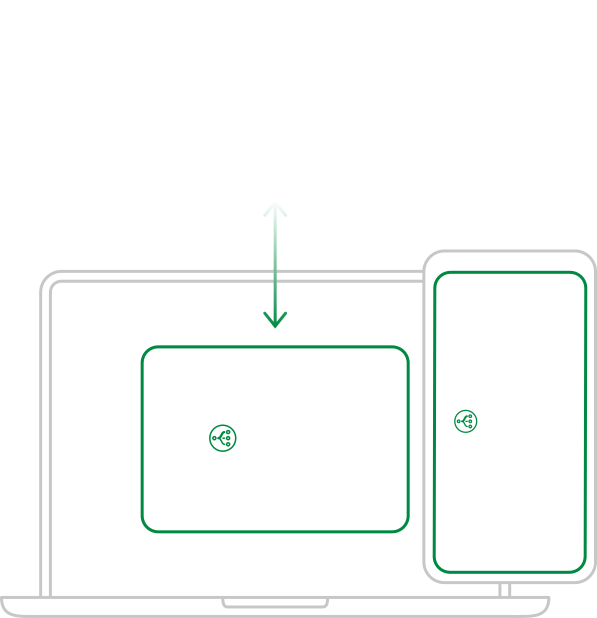
Once a model runs on the user's device, each additional voice command is essentially free. Confidence-based routing means audio goes to the cloud only when the on-device model isn't sure — typically a small fraction of total interactions. For fitness apps, where the vast majority of commands are short and predictable ("next", "skip", "timer"), the savings compound quickly and improve as usage scales.
Responses that keep pace with training
Cloud voice AI adds 200–500ms of network latency. Mid-set or mid-run, that lag is noticeable and disruptive. On-device processing responds in milliseconds — keeping interactions tight and natural, even when users are breathing hard and short on patience.
Works wherever your users train
Gyms have dead zones. Outdoor runs lose cell coverage. Basements drop WiFi. On-device voice AI keeps your coaching functional regardless of connectivity — so your app doesn't go silent the moment a user steps underground or into a steel-framed building.
Privacy by default
Audio processed on-device never leaves the user's phone. Useful for users who prefer not to send workout audio to third-party services.
No rate limits
On-device runs on the user's hardware. Engagement spikes don't trigger API throttling or require capacity planning on your end.
Predictable cost structure
Per-request cloud pricing makes margins harder to forecast at scale. On-device shifts variable usage costs toward fixed integration work.
Reduced data usage
Less audio sent over the network means lower data consumption — relevant for users on limited plans doing outdoor workouts.
Integrates with your existing app
No rewrite required. Switchboard SDKs work alongside the frameworks your team already uses — whether you're building cross-platform or native.




Already have voice AI in your app? We can help you layer on-device processing on top of your existing architecture — without replacing what's working.
Ready to reduce your voice AI costs?
Tell us about your app and we'll help you design a hybrid architecture that fits your stack and current usage patterns.
Go deeper
The architecture behind hybrid voice AI — and why it matters at scale.
Your Voice AI Bill Is Telling You to Go Hybrid
How confidence-based routing between on-device and cloud models eliminates the majority of unnecessary API calls.
EdgeSpeech
Avoid the financial drain and developer strain of on-device audio with EdgeSpeech, our easy-to-use hook for React Native.
Building OpenAI Realtime voice agents in React Native
The OpenAI Realtime API makes building voice agents easy. Bringing that agent into a mobile app is a different challenge — here's how to do it in React Native.