Open navigation menu

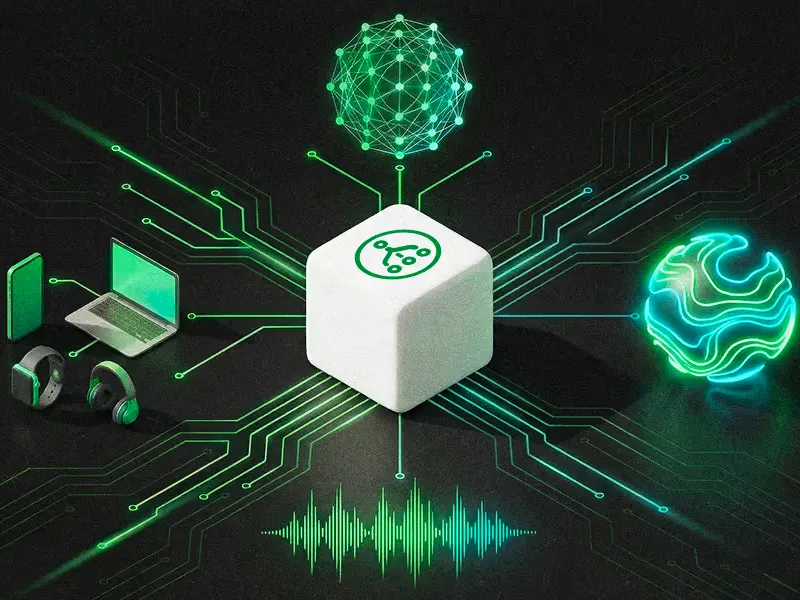
The real challenge starts in production — when users behave unpredictably, devices misbehave, networks degrade, and audio pipelines collide with reality. That’s where reliability is earned, not claimed.
At Switchboard, we’ve come to believe that reliability isn’t a feature you ship once. It’s something that compounds over time.
The Hidden Cost of Real-Time Audio
Voice and real-time audio systems are uniquely unforgiving.
They sit at the intersection of:
heterogeneous hardware (phones, TVs, cars, speakers)
OS-level audio stacks with undocumented quirks,
fluctuating network conditions
real-time constraints measured in milliseconds
and increasingly, hybrid AI pipelines that span on-device and cloud execution
On paper, many systems look equivalent. In practice, they fail in subtly different ways.
A microphone is already in use.
The CPU is throttled.
The user switches devices mid-session.
A model’s confidence drops just enough to matter.
A network hiccup causes a half-second stall that ruins the experience.
These are edge cases — and in real-time systems, the edge cases are the product.
Why the Long Tail Matters
Each Switchboard customer doesn’t bring a single use case.
They bring a long tail of scenarios shaped by their users, devices, environments, and workflows.
Two apps may both say they’re “doing voice,” but in production:
their audio graphs are different
their fallback strategies differ
their latency tolerances aren’t the same
and their failure modes diverge quickly
This combinatorial complexity grows faster than documentation, tutorials, or best practices can keep up with.
That’s where most platforms plateau.
What We Learn by Sitting in the Middle
Switchboard operates at the orchestration layer — where devices, audio pipelines, AI models, and networks meet.
Because of that position, we don’t just see what developers intend to build. We see how systems actually behave in the wild.
Over time, this creates a unique dataset:
where pipelines stall or degrade
which recovery paths work and which make things worse
when on-device execution succeeds and when hybrid fallback is necessary
which architectural patterns scale and which quietly rot
Importantly, this data isn’t about user content. It’s about system behavior.
It’s a living map of what breaks, what recovers, and what “just works” across a vast range of real-world conditions.
Reliability That Improves With Every Customer
Here’s the non-obvious part:
Edge cases don’t converge — they diversify.
Each new customer expands the space of:
hardware configurations
network environments
audio processing chains
and human behaviors interacting with them
That diversity is exactly what allows reliability to compound.
Every new deployment improves:
our defaults
our orchestration logic
our failure handling
and our understanding of how real-time systems behave under stress
Those improvements then flow back into the platform, making Switchboard more robust for the next customer — who brings new edge cases of their own.
This creates a flywheel:
more use cases → better reliability → easier adoption → more use cases.
Why This Can’t Be Shortcutted
Open source is essential for adoption, and we embrace it.
But open source shares how to build, not how systems behave at scale.
Production reliability is shaped by:
years of exposure to rare failures
patterns that only emerge under load
and recovery strategies learned through repetition
That knowledge can’t be copied from a repo or inferred from documentation.
It has to be earned.
And because Switchboard spans devices, platforms, and execution environments, the reliability we accumulate is inherently cross-platform — something closed ecosystems can’t easily observe, let alone replicate.
Reliability as a Network Effect
At a certain point, reliability itself becomes a network effect.
Developers choose Switchboard not just because it’s flexible, but because:
“It works in situations where other systems don’t.”
That reputation compounds just like the data behind it. The more systems run through Switchboard, the more resilient it becomes. The more resilient it becomes, the more teams trust it with critical paths.
This is how infrastructure quietly wins.
The Long View
We don’t believe reliability is something you bolt on later.
We believe it’s something you grow — one edge case at a time.
Switchboard’s goal isn’t just to make real-time audio possible across devices and platforms.
It’s to make it dependable, even in the messy, unpredictable reality of how people actually use technology.
That’s what compounding reliability looks like.
And that’s what we’re building.